
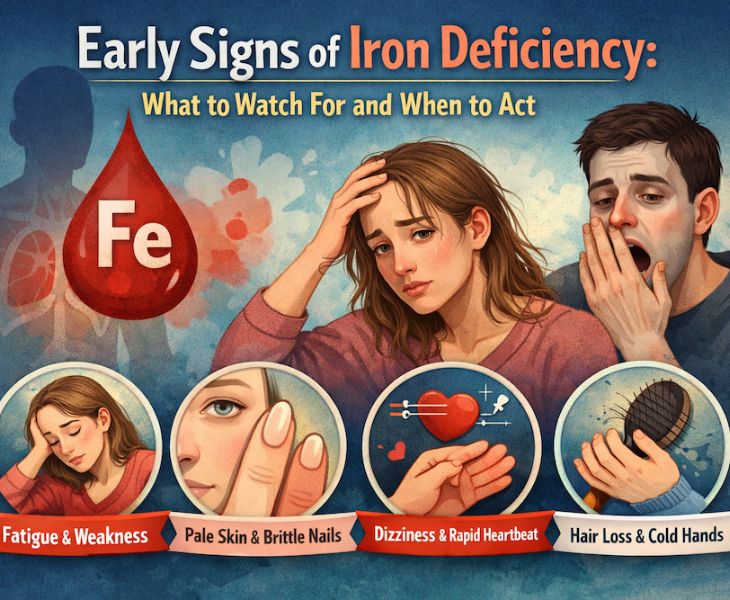
What Are the Early Signs of Iron Deficiency?
Iron deficiency is one of the most common nutritional deficiencies worldwide, yet many people miss the early warning signs. When your body lacks iron, it struggles to produce hemoglobin, the protein that helps red blood cells carry oxygen. This leads to subtle but progressive symptoms that worsen over time.
Early detection helps prevent complications such as severe anemia, chronic fatigue, and impaired immune function. Below are the early symptoms you should watch for, including those often overlooked.
Table of Contents
Most Common Early Signs of Iron Deficiency
Iron deficiency develops gradually, and the early signs are often subtle enough that many people dismiss them as stress or lack of sleep. However, understanding how and why these symptoms appear will help you identify deficiency much sooner.

1. Persistent Fatigue and Weakness
Fatigue is the hallmark of early iron deficiency. Even when you sleep well, you may still feel drained throughout the day. This occurs because iron is essential for producing hemoglobin, the protein responsible for carrying oxygen to your tissues. When oxygen delivery drops, your muscles and organs have less fuel to function efficiently.
Individuals may notice:
- A heavy, dragging feeling in their limbs
- Decreased performance during exercise
- Feeling tired shortly after waking up
- Difficulty completing tasks that once felt easy
Fatigue from iron deficiency is systemic, meaning it affects the entire body and rarely improves without correcting the underlying cause.
2. Pale or Yellowish Skin
Pallor is another early and easily noticeable sign. When hemoglobin levels drop, the red color of your blood becomes less vibrant, making skin appear washed out. This is especially visible in areas with thinner skin or blood vessels close to the surface.
Check for paleness in:
- The face and lips
- The nail beds
- The inner eyelids (should appear red, not pale or whitish)
- The palms of your hands
In more severe cases, skin may take on a slight yellowish cast due to increased red blood cell breakdown.
3. Shortness of Breath
Iron deficiency can make you feel out of breath during routine tasks such as walking, light household chores, or climbing a few steps. With decreased hemoglobin, the body compensates by increasing breathing rate to deliver more oxygen.
Early signs include:
- Feeling winded more quickly during exercise
- Struggling to catch your breath during mild physical activity
- A sensation of chest tightness or “air hunger”
This symptom tends to progress gradually and is often mistaken for poor fitness.
4. Frequent Headaches or Dizziness
The brain is extremely sensitive to oxygen changes. When oxygen levels drop due to low iron, the blood vessels in the brain expand, leading to pressure and discomfort.
Signs may include:
- Throbbing headaches that occur more frequently
- Dizziness when standing up quickly
- Difficulty focusing or “brain fog”
- Reduced mental clarity
These symptoms can impact productivity and are often among the first signs overlooked.
Subtle but Important Symptoms to Notice
These symptoms are less obvious but highly significant. They often appear early and should not be ignored, especially if you belong to a high-risk group (women, pregnant individuals, vegetarians, or those with heavy menstrual cycles).
5. Cold Hands and Feet
Chronic coldness in the extremities can stem from reduced oxygen delivery and impaired circulation. Iron helps maintain optimal energy for the cardiovascular system. When iron drops:
- Blood vessels in the hands and feet constrict
- Body temperature regulation weakens
- You may feel cold even in warm environments
This symptom is often misattributed to weather changes or poor circulation alone.
6. Brittle Nails or Spoon-Shaped Nails (Koilonychia)
Nail changes are a physical sign many people notice only after they become severe. Iron plays a role in keratin production, which supports nail strength.
You may observe:
- Nails that break easily
- Thin or brittle nail surfaces
- Nails forming a concave or spoon shape
- Ridges on the nail surface
These changes often indicate long-term deficiency and warrant immediate attention.
7. Unusual Cravings (Pica)
Pica is one of the more distinctive symptoms of iron deficiency. Individuals may crave non-food substances such as:
- Ice (pagophagia, the most common)
- Clay
- Dirt
- Chalk
- Paper or cardboard
Though the exact reason remains unclear, research suggests the body may attempt to stimulate alertness or address nutrient imbalances through specific textures or sensations. Pica often indicates moderate to severe deficiency.
8. Hair Loss or Thinning
Hair follicles require adequate iron to grow and regenerate. When iron levels fall:
- Hair enters a “resting” phase
- Strands shed more quickly
- New hair growth slows
This results in:
- Noticeable thinning near the temples or crown
- Increased hair fall in the shower
- More hair left on pillows or hairbrushes
Iron deficiency-related hair loss is reversible in most cases once iron is corrected.
9. Restless Legs Syndrome (RLS)
RLS is strongly linked to low iron levels, particularly in the brain. Iron supports dopamine production, which regulates muscle movement.
Symptoms include:
- Tingling, crawling, or itching sensations in the legs
- A strong urge to move the legs at night
- Difficulty falling asleep due to discomfort
- Temporary relief when walking or stretching
RLS can significantly impact sleep quality and daily functioning, making it a critical early sign to address.
Early Signs of Iron Deficiency in Women
Women are at higher risk due to menstruation, pregnancy, and hormonal changes.
Menstrual Irregularities
Heavy periods or irregular bleeding can both cause and signal iron deficiency.
Increased Fatigue During the Menstrual Cycle
If fatigue intensifies during menstruation, low iron may be a contributing factor.
What Causes Iron Deficiency?
The Most Common Causes Include:
- Inadequate dietary intake
- Heavy menstrual bleeding
- Pregnancy and breastfeeding
- Gastrointestinal bleeding
- Poor iron absorption (due to conditions like celiac disease)
- Low-nutrient diets or restrictive eating patterns
How to Confirm Iron Deficiency
Laboratory Tests
A healthcare provider may recommend:
- Serum ferritin
- Hemoglobin and hematocrit
- Total iron-binding capacity (TIBC)
- Serum iron levels
For accurate diagnosis, consult a medical professional.
Authoritative Reference:
- Centers for Disease Control and Prevention (CDC) – Iron Deficiency Facts
- National Institutes of Health (NIH) – Iron Fact Sheet
How to Improve Iron Levels Naturally
Iron-Rich Foods
Include both heme and non-heme sources:
- Red meat, poultry, liver, eggs
- Spinach, kale, broccoli
- Beans, lentils, chickpeas
- Nuts, seeds, fortified cereals
Boosting Iron Absorption
Vitamin C enhances iron absorption. Pair iron-rich foods with:
- Citrus fruits
- Bell peppers
- Tomatoes
- Strawberries
Avoiding Iron Blockers
Limit intake of tea, coffee, and calcium supplements during iron-rich meals.
When to See a Doctor
Seek professional care if you experience:
- Persistent fatigue
- Breathlessness
- Paleness
- Heavy menstrual bleeding
- Symptoms lasting more than two weeks
Untreated iron deficiency may lead to more serious complications, including anemia and weakened immunity.
FAQs About the Early Signs of Iron Deficiency
What are the earliest signs of iron deficiency?
Fatigue, pale skin, headaches, and cold hands are often among the earliest symptoms.
Can iron deficiency cause anxiety or mood changes?
Yes. Low oxygen delivery to the brain can affect mood regulation and cognitive function.
How quickly do symptoms appear?
Symptoms develop gradually, often over months, making early detection challenging.
Does iron deficiency affect digestion?
Yes. Some individuals experience cravings, appetite loss, or changes in bowel habits.
Can iron deficiency occur even if I eat healthily?
Yes. Factors like poor absorption, heavy bleeding, or medical conditions may reduce iron levels.
Final Thoughts
Iron deficiency is common but manageable when detected early. Understanding the early signs of iron deficiency allows you to take action before symptoms become severe. By monitoring your health, adjusting your diet, and consulting a healthcare professional when needed, you can protect your energy, immunity, and long-term wellness.
Call to Action
If you found this guide useful, explore more health insights on The Planttube Blog. For nutrition-focused resources and diabetic-friendly recipe collections, visit your digital shop and discover practical tools to support your wellness journey.