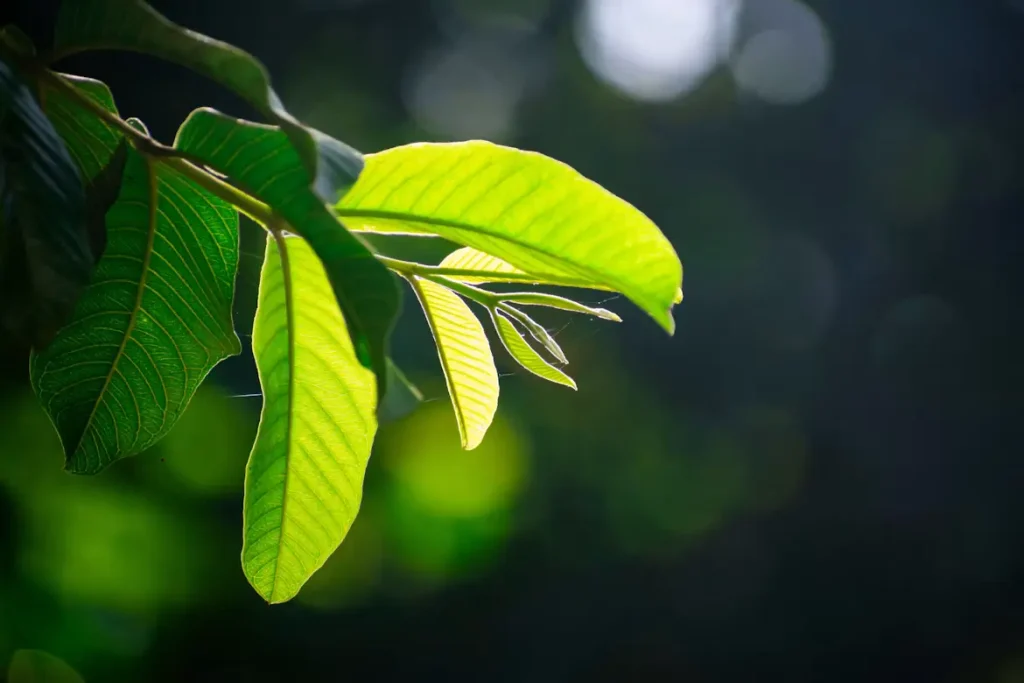
Guava is best known for its delicious tropical fruit, but the leaves of the guava plant have also been used in traditional medicine for generations. From guava leaf tea to traditional herbal preparations, guava leaves medicinal uses have attracted growing interest because the leaves contain a variety of naturally occurring plant compounds.
Research has identified compounds such as quercetin, catechins, kaempferol, gallic acid, and other polyphenols in guava leaves. Scientists have investigated these compounds for antioxidant, antimicrobial, anti-inflammatory, digestive, and metabolic effects. However, it is important to distinguish traditional uses and early research from treatments that have been firmly established in human clinical studies.
So, what are guava leaves actually used for, and what does the research say?
In this guide, we’ll explore the most commonly discussed medicinal uses of guava leaves, how guava leaf tea is prepared, potential benefits, safety considerations, and when you should speak with a healthcare professional.
Disclaimer: This article is for educational purposes only and does not provide medical advice. Guava leaves and guava leaf preparations should not be used to diagnose, treat, or cure a medical condition or as a replacement for prescribed medication. If you have a health condition, take medication, are pregnant or breastfeeding, or are considering concentrated herbal extracts, speak with a qualified healthcare professional first.
What Are Guava Leaves?
Guava leaves come from the guava plant, scientifically known as Psidium guajava. The plant is widely grown in tropical and subtropical regions and has a long history of use as both food and traditional medicine.
While guava fruit is valued for its nutrients, guava leaves contain a different combination of bioactive compounds. Reviews of the scientific literature have identified numerous phytochemicals in the leaves, including flavonoids, phenolic acids, tannins, and other plant compounds.
These compounds are one reason researchers are interested in guava leaves. Laboratory and animal studies have investigated possible antioxidant, antimicrobial, anti-inflammatory, antidiabetic, lipid-lowering, and digestive effects. However, researchers also emphasize that more high-quality clinical studies are needed to establish how effective guava leaf preparations are for specific health conditions.
If you want to learn more about the nutritional side of guava, consider reading our related guide on Benefits of Guava Fruit.
Guava Leaves Medicinal Uses and Potential Health Benefits
The traditional use of guava leaves covers a wide range of health concerns. Modern research has investigated several of these applications, although the strength of evidence varies considerably.
Here are some of the most commonly discussed guava leaves medicinal uses.
1. Guava Leaves May Support Digestive Health
One of the best-known traditional uses of guava leaves is for digestive problems, particularly diarrhea.
Guava leaf preparations have been used traditionally in many countries for gastrointestinal complaints. Researchers believe that some of the plant’s flavonoids, tannins, and other compounds may contribute to its potential effects on intestinal activity and microorganisms.
There is also some human research. A randomized clinical trial involving adults with acute infectious diarrhea examined guava leaf decoction alongside oral rehydration treatment. The researchers reported improvements in stool frequency and consistency in the study groups receiving the decoction. However, this was one clinical trial involving a specific preparation and population, so its results should not be generalized to every guava leaf tea or extract.
This is an important distinction: guava leaves may have potential digestive benefits, but they should not automatically be considered a treatment for every cause of diarrhea.
For persistent diarrhea, especially when dehydration is a concern, proper medical care and fluid replacement are important. The World Health Organization identifies dehydration as one of the major dangers associated with diarrheal disease.
For more information, you can also explore our related article on Foods That Support Digestive Health.
2. Guava Leaves Contain Antioxidant Compounds
Another important area of research involves the antioxidant properties of guava leaves.
Antioxidants help protect cells from oxidative damage associated with reactive molecules known as free radicals. Guava leaves contain several polyphenolic compounds that have demonstrated antioxidant activity in laboratory research.
Research has identified compounds including quercetin, kaempferol, catechins, gallic acid, and other phenolic substances in guava leaves. The concentration of these compounds can vary depending on factors such as the guava variety and extraction method.
This means guava leaves may be an interesting source of plant-based antioxidants, but drinking guava leaf tea should not be viewed as a cure-all.
For a broader explanation of how antioxidants work, link this section to our guide on Understanding Antioxidants.
3. Guava Leaves May Support Healthy Blood Sugar Levels
Blood sugar management is another area in which guava leaves have attracted scientific interest.
Studies have investigated guava leaf extracts for their potential effects on enzymes involved in carbohydrate digestion and glucose metabolism. Some research suggests that certain compounds in guava leaves may influence post-meal blood glucose responses.
However, much of the evidence involves specific extracts, laboratory models, animals, or particular commercial preparations. This does not mean that drinking homemade guava leaf tea will necessarily produce the same effects.
If you have diabetes or take medication that affects blood sugar, it is especially important to speak with your healthcare provider before regularly consuming concentrated guava leaf preparations.
For additional educational content, consider linking to Healthy Ways to Support Blood Sugar.
4. Guava Leaves May Have Antimicrobial Properties
Guava leaves have also been studied for potential antimicrobial activity.
Laboratory research has identified compounds in guava leaves that may act against certain microorganisms. This has contributed to interest in possible applications involving digestive health, oral health, food preservation, and topical products.
However, laboratory antimicrobial activity does not mean guava leaves can replace antibiotics or other treatments for infections.
If you have symptoms of an infection, especially a serious or worsening infection, seek appropriate medical care rather than relying solely on an herbal preparation.
5. Guava Leaves May Support Oral Health
The antimicrobial and anti-inflammatory properties being studied in guava leaves have also generated interest in oral health.
Traditional preparations made from guava leaves have been used in some cultures as mouth rinses or for other oral-care purposes. Researchers have investigated guava leaf compounds for activity against microorganisms associated with oral health.
Still, guava leaves should be viewed as a potential complementary approach rather than a replacement for regular brushing, flossing, professional dental cleanings, or treatment for dental infections.
If you experience persistent tooth pain, swelling, bleeding gums, or other concerning symptoms, see a dentist.
6. Guava Leaves May Have Anti-Inflammatory Potential
Inflammation is a normal part of the body’s immune response, but excessive or persistent inflammation can be associated with a variety of health conditions.
Research into guava leaves has identified flavonoids, phenolic compounds, and other substances with potential anti-inflammatory activity. Recent reviews describe anti-inflammatory effects among the biological activities being investigated in guava leaf extracts.
However, most of this research does not establish guava leaves as a treatment for inflammatory diseases in humans.
More clinical research is needed before specific therapeutic claims can be made.
7. Guava Leaves May Support Skin Health
Guava leaves are also being studied for potential applications in skin care.
Their antioxidant and antimicrobial compounds have prompted research into possible cosmetic and topical uses. Laboratory studies have examined guava leaf extracts for antioxidant activity and effects on enzymes involved in skin-related processes.
This research is promising from a product-development perspective, but laboratory findings should not be interpreted as proof that homemade guava leaf preparations can treat acne, wounds, infections, or other skin conditions.
Before applying any herbal preparation to damaged or sensitive skin, consider discussing it with a healthcare professional or dermatologist.
8. Guava Leaves and Hair Health
Hair health is another area where guava leaves are frequently discussed online.
Traditional use has included guava leaf preparations for hair and scalp care. Laboratory research has examined guava leaf extract for antioxidant activity and possible effects on pathways associated with androgen-related hair loss.
However, this research was conducted using specific extracts and laboratory models. It does not establish that washing the hair with guava leaf tea can prevent or reverse hair loss.
If you are experiencing significant or sudden hair loss, identifying the underlying cause is more important than relying on an unproven herbal remedy.
How to Prepare Guava Leaf Tea
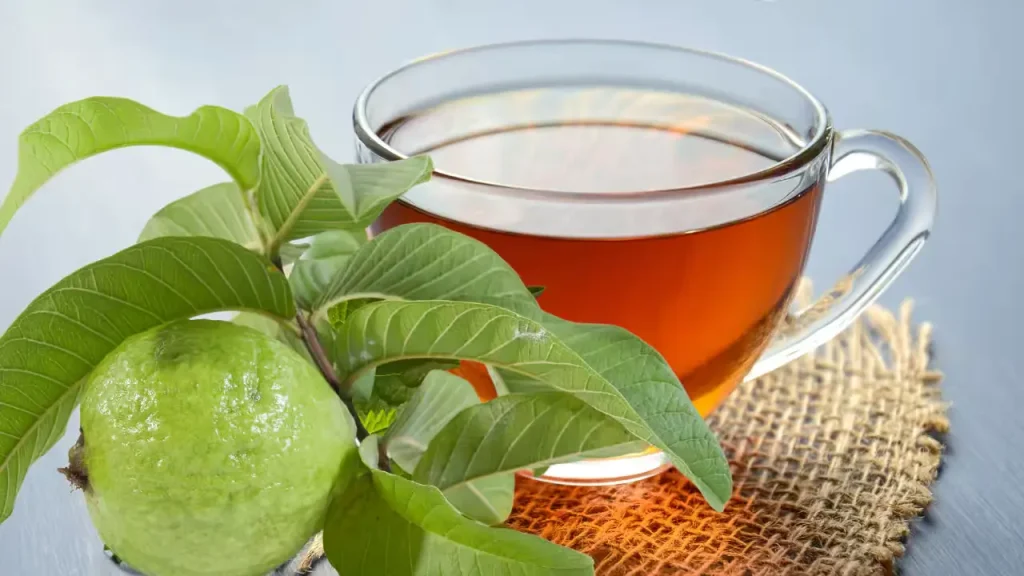
Guava leaf tea is one of the simplest traditional ways to use guava leaves.
What You Need
- Fresh, clean guava leaves or properly dried guava leaves
- Clean drinking water
- A small pot or kettle
- A strainer
- A cup
Basic Preparation
- Wash fresh guava leaves thoroughly with clean water.
- Add the leaves to water in a clean pot.
- Bring the water to a boil.
- Allow the leaves to simmer or steep.
- Strain the liquid before drinking.
- Allow it to cool to a comfortable temperature.
There is no universally established therapeutic recipe or dosage for homemade guava leaf tea. Research studies often use specific varieties, extraction methods, concentrations, and quantities, meaning their findings cannot automatically be applied to every homemade preparation.
For that reason, avoid assuming that a stronger tea or a larger quantity will provide greater health benefits.
Guava Leaf Tea vs. Guava Leaf Extract
Not all guava leaf products are the same.
Guava Leaf Tea
Tea is generally made by steeping or simmering leaves in water. The resulting preparation may have a different concentration of active compounds depending on the leaves, water temperature, preparation time, and quantity used.
Guava Leaf Extract
Extracts are more concentrated and may be produced using different extraction methods. Research has shown that extraction methods can significantly influence the types and amounts of polyphenolic compounds obtained from guava leaves.
Because extracts may be more concentrated than traditional tea, they should be approached with additional caution.
How Much Guava Leaf Tea Should You Drink?
There is no universally accepted therapeutic dosage for guava leaf tea that applies to everyone.
Some research studies have used carefully measured guava leaf preparations, but those protocols should not automatically be copied at home. For example, the clinical diarrhea study used a specific decoction made from a particular guava variety and evaluated different quantities under controlled conditions.
Your age, health status, medications, and the concentration of the preparation can all affect safety.
If you are considering guava leaf tea for a specific medical condition, ask a healthcare professional about whether it is appropriate for you.
Are Guava Leaves Safe?
Guava leaves have a long history of traditional use, but “natural” does not automatically mean “risk-free.”
Research on guava leaves is still developing, and safety information can vary depending on whether someone consumes fresh leaves, tea, concentrated extracts, or commercially prepared products.
The National Institutes of Health Office of Dietary Supplements notes that supplements and herbal products can contain active ingredients that interact with medications and may cause adverse effects, particularly at higher doses.
The National Center for Complementary and Integrative Health also recommends discussing herbal products with healthcare providers because herb-drug interactions can occur and clinical evidence about many interactions remains limited.
Who Should Be Especially Careful?
Talk with a healthcare professional before using guava leaf preparations if you:
- Take prescription medication.
- Take medication for diabetes or blood sugar control.
- Take medication for blood pressure or another chronic condition.
- Are pregnant or breastfeeding.
- Have a chronic medical condition.
- Are considering a concentrated guava leaf extract.
- Plan to give guava leaf preparations to a child.
Also stop using a preparation and seek appropriate medical advice if you develop an unexpected reaction.
What Does the Research Actually Tell Us?
The research surrounding guava leaves is interesting, but it is important to keep the evidence in perspective.
Laboratory studies have identified potentially useful compounds and biological activities. Animal studies provide additional clues about how guava leaf compounds might work. Some human studies have also investigated specific preparations, including research involving blood glucose and acute diarrhea.
However, reviews published in the scientific literature continue to point out the need for more detailed and well-designed clinical trials before firm health claims can be made for guava leaf extracts.
In other words, the evidence supports continued research, rather than treating every traditional claim as scientifically proven.
Frequently Asked Questions About Guava Leaves Medicinal Uses
What are the medicinal uses of guava leaves?
Traditional uses of guava leaves include digestive support, particularly for diarrhea, as well as applications involving oral health, skin care, and other health concerns. Modern research has investigated antioxidant, antimicrobial, anti-inflammatory, and metabolic effects, but the evidence differs by use.
Can you drink guava leaf tea every day?
There is no universally established therapeutic recommendation for drinking guava leaf tea every day. If you plan to consume it regularly, particularly in large quantities or as a concentrated preparation, discuss it with a healthcare professional.
What is guava leaf tea good for?
Guava leaf tea has traditionally been used for digestive complaints and is being studied for its antioxidant and other biological properties. However, more human research is needed to determine its effectiveness for specific health conditions.
Can guava leaves help with diarrhea?
Guava leaves have a long history of traditional use for diarrhea, and at least one randomized clinical trial has investigated a specific guava leaf decoction in adults with acute infectious diarrhea. However, diarrhea can have many causes, and dehydration can become serious.
Can guava leaves lower blood sugar?
Research has investigated guava leaf extracts for their potential effects on blood glucose, but this does not mean guava leaves can replace diabetes medication or medical treatment. Anyone taking blood-sugar-lowering medication should consult a healthcare professional before using concentrated guava leaf preparations.
Are guava leaves safe to eat?
Safety depends on the preparation, amount, and individual circumstances. Fresh leaves, tea, and concentrated extracts are not necessarily equivalent. If you take medication or have a medical condition, ask a healthcare professional before using guava leaves medicinally.
The Bottom Line on Guava Leaves Medicinal Uses
The growing interest in guava leaves medicinal uses is supported by a combination of traditional knowledge and scientific research. Guava leaves contain numerous bioactive compounds, including flavonoids and phenolic substances, that have demonstrated antioxidant and other biological activities in laboratory research.
The strongest area of traditional and clinical interest is digestive health, particularly diarrhea, although more research is still needed. Other potential applications involving blood sugar, oral health, inflammation, skin, and antimicrobial activity are also being investigated.
The key is to keep the evidence in perspective. Guava leaf tea can be part of a traditional wellness practice, but it should not automatically be considered a treatment or replacement for medical care.
If you choose to use guava leaves, prioritize clean preparation, avoid excessive amounts, and speak with a healthcare professional if you take medication, have an existing health condition, or are considering concentrated extracts.
For additional reading, explore our related guides on Benefits of Guava Fruit, Health Benefits of Herbal Teas, Natural Sources of Antioxidants, and Foods That Support Digestive Health.
Important Health Disclaimer
This content is intended for general educational and informational purposes only. It is not intended to provide medical advice, diagnosis, treatment, or a substitute for professional healthcare. Herbal products can have active biological effects and may interact with medications. Always consult your doctor, pharmacist, dietitian, or another qualified healthcare professional before using guava leaves or other herbal products for a health condition. Seek prompt medical care for severe, persistent, or worsening symptoms.