

Sweet, juicy, and naturally refreshing, pineapple is one of the most popular tropical fruits around the world. But beyond its delicious flavor, pineapple also provides several important nutrients and plant compounds that can support a healthy diet.
The potential pineapple health benefits come from its combination of vitamin C, manganese, fiber, antioxidants, and an enzyme complex called bromelain. Research has shown particular interest in bromelain because of its biological activity, although much of the research involves concentrated bromelain preparations rather than simply eating pineapple.
So, is pineapple good for you?
For most people, yes. Whole pineapple can be a nutritious addition to a balanced diet. However, it is important to separate established nutritional benefits from claims that pineapple can treat or prevent specific diseases.
In this article, we’ll explore the benefits of pineapple, its nutritional value, what bromelain does, how much pineapple you may want to eat, and the best ways to include it in your diet.

Pineapple Nutrition at a Glance
Pineapple is relatively nutrient-dense for a fruit and can contribute several vitamins, minerals, fiber, and naturally occurring plant compounds to your diet.
One of its best-known nutrients is vitamin C. Vitamin C acts as an antioxidant and is needed for collagen production, wound healing, iron absorption, and normal immune function.
Pineapple also provides manganese, a mineral involved in energy metabolism, antioxidant defenses, bone formation, and normal immune function.
Other nutrients found in pineapple include:
- Fiber
- Vitamin B6
- Folate
- Copper
- Potassium
- Naturally occurring carbohydrates
- Various plant compounds
The exact nutritional value varies depending on serving size and whether the pineapple is fresh, frozen, canned, or processed into juice.
For the most accurate nutrition information for a particular serving, check the USDA’s Food Data Central database.

10 Potential Pineapple Health Benefits
1. Pineapple May Support Immune Health
One of the most important pineapple health benefits is its vitamin C content.
Vitamin C is essential for normal immune-system function. It also acts as an antioxidant, helping protect cells from oxidative damage. The body needs vitamin C for several biological processes involved in maintaining healthy tissues and immune defenses.
Eating pineapple won’t guarantee that you avoid colds or infections. However, including vitamin-C-rich fruits as part of a varied diet can help you meet your nutritional needs.
Pineapple can therefore be one convenient way to add more vitamin C to your meals and snacks.
2. Pineapple May Support Healthy Digestion
Pineapple contains both water and dietary fiber, two components that can contribute to a healthy eating pattern.
Fiber is important for normal bowel function and can help add bulk to the diet. Increasing fiber-rich foods gradually while drinking enough fluids can support digestive health.
Pineapple also contains bromelain, a group of enzymes that break down proteins.
This is one reason pineapple has attracted interest when it comes to digestion. However, it is important not to overstate the evidence. Research on bromelain has investigated concentrated preparations and specific clinical situations, so the effects of eating ordinary portions of pineapple may not be equivalent.
In other words, pineapple can be part of a digestion-friendly diet, but it should not be considered a treatment for digestive disorders.
3. Pineapple Provides Antioxidants
Another potential benefit of pineapple is its contribution of antioxidants.
Antioxidants help the body deal with oxidative stress caused by reactive molecules. Vitamin C is one of the better-known antioxidants in pineapple.
Rather than focusing on one “superfood,” however, a better approach is to eat a variety of colorful fruits and vegetables. Different plant foods contain different combinations of vitamins, minerals, and phytochemicals.
Adding pineapple to your diet is therefore one small way to increase dietary variety.
4. Pineapple Contains Bromelain
Bromelain is probably the most talked-about compound associated with pineapple.
It is a mixture of proteolytic enzymes naturally found in pineapple, particularly in the stem and fruit. Researchers have studied bromelain for its potential effects on inflammation, pain, digestion, and other biological processes.
Clinical research is promising in some areas but remains mixed. A systematic review and meta-analysis found potential benefits of oral bromelain for some pain outcomes, while also noting adverse effects such as gastrointestinal symptoms, nausea, and headache in some studies.
More recent research also emphasizes that results vary depending on the population studied, dosage, treatment duration, and whether bromelain is used alone or alongside other treatments.
This distinction matters:
Eating pineapple is not the same as taking a concentrated bromelain supplement.
You should not assume that the effects observed in studies of bromelain supplements will occur simply from eating a serving of pineapple.
5. Pineapple May Support Healthy Skin
Pineapple can contribute to healthy skin through its vitamin C content.
Your body needs vitamin C to produce collagen, a structural protein important for skin, connective tissue, bones, and wound healing.
Getting enough vitamin C through food is therefore important for normal collagen production.
That doesn’t mean eating pineapple will eliminate wrinkles or cure skin conditions. Healthy skin depends on many factors, including genetics, sun exposure, sleep, hydration, nutrition, and overall lifestyle.
Still, adding vitamin-C-containing fruits such as pineapple to a balanced diet is a nutritious choice.
6. Pineapple Provides Manganese for Normal Body Functions
Pineapple is also a source of manganese.
Manganese is a mineral your body needs for several processes, including energy production, antioxidant protection, bone formation, and immune function.
Research suggests manganese is involved in bone formation, although the evidence connecting manganese intake directly with improved bone health in humans is limited and inconsistent.
This is another example of why it is better to describe pineapple as a nutrient-rich food rather than a treatment for a specific health condition.
7. Pineapple Can Help You Eat More Fruit
Sometimes the simplest benefit is the most practical.
Pineapple’s naturally sweet and acidic flavor makes it an easy addition to breakfast, snacks, salads, smoothies, and savory meals.
If you struggle to eat enough fruit, keeping cut pineapple available in the refrigerator can make healthy snacking more convenient.
The Dietary Guidelines for Americans recommend making at least half of fruit intake come from whole fruit rather than juice. Fresh, frozen, canned, and dried fruits can all contribute to fruit intake, although canned options with little or no added sugar are generally preferable.
8. Pineapple Can Contribute to Your Fluid Intake
Pineapple contains a substantial amount of water, so eating it can contribute to your overall fluid intake.
However, water-rich fruits should complement—not replace—your normal water consumption.
If you’re interested in hydration, you can also read our guide on how much water you should drink daily.
9. Pineapple Can Fit Into a Weight-Management Diet
Can pineapple help with weight loss?
Pineapple isn’t a fat-burning food, and there is no good reason to treat it as a special weight-loss ingredient.
However, whole pineapple can fit comfortably into a balanced weight-management diet.
Its water and fiber content can make whole fruit more satisfying than many highly processed sweet snacks. At the same time, pineapple contains naturally occurring sugars and carbohydrates, so portion size still matters.
A better strategy is to replace less nutritious snacks with reasonable portions of whole fruit rather than adding large amounts of pineapple on top of your usual calorie intake.
10. Pineapple Adds Variety to a Nutrient-Rich Diet
Perhaps the biggest overall benefit of pineapple is that it makes healthy eating more enjoyable.
A nutritious diet doesn’t need to be boring. Pineapple can provide sweetness, acidity, texture, and variety while contributing vitamin C, manganese, fiber, and other nutrients.
Try combining it with other fruits, vegetables, whole grains, protein sources, nuts, and seeds to create balanced meals.
What Is Bromelain and Why Is It Important?
Bromelain is a group of protein-digesting enzymes associated with the pineapple plant.
It has been studied extensively because laboratory and clinical research suggests that bromelain may influence several biological pathways, including processes involved in inflammation.
However, the evidence needs to be interpreted carefully.
A 2023 systematic review found that the effects of bromelain supplementation on inflammatory markers were inconsistent, with differences in study populations, dosages, treatment duration, and outcomes.
A more recent review published in 2026 also concluded that many potential therapeutic effects of bromelain remain supported primarily by laboratory and animal research, with more well-designed clinical studies needed to establish its effectiveness and appropriate dosing.
This means bromelain is scientifically interesting, but claims that pineapple itself can “cure inflammation,” “detox the body,” or treat serious diseases go beyond the available evidence.
If you’re considering bromelain supplements, talk with a qualified healthcare professional—especially if you take medications or have an underlying medical condition.
Fresh Pineapple vs. Canned Pineapple vs. Pineapple Juice
Not all pineapple products are nutritionally identical.
Fresh Pineapple
Fresh pineapple is an excellent choice when available.
It provides:
- Fiber
- Water
- Vitamin C
- Manganese
- Naturally occurring plant compounds
- Natural sweetness without added sugar
You can eat it on its own or add it to salads, yogurt, smoothies, or savory meals.
Frozen Pineapple
Frozen pineapple can also be a convenient option.
Because it doesn’t require peeling or cutting, it can make healthy eating easier. Look for plain frozen pineapple without added sugar.
It’s especially useful for smoothies or quick snacks.
Canned Pineapple
Canned pineapple can be nutritious and convenient, but check the label.
Choose pineapple packed in:
- Water
- Its own juice
- 100% fruit juice
Try to limit products packed in heavy syrup or containing substantial added sugar.
The Dietary Guidelines recommend choosing canned fruits with 100% juice or the lowest amount of added sugars.
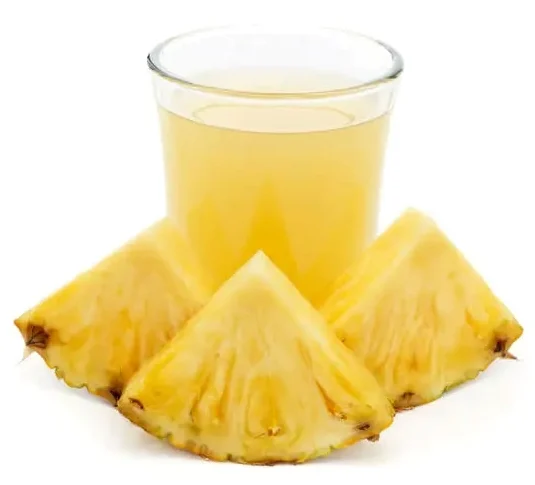
Pineapple Juice
Pineapple juice can provide some nutrients, but whole pineapple generally has an advantage because it retains more of the fruit’s fiber.
It’s also easier to consume a large amount of fruit sugar quickly when drinking juice.
For everyday eating, make whole fruit your primary choice and enjoy juice in moderation.
How Much Pineapple Should You Eat a Day?
There isn’t a universal amount of pineapple that everyone should eat every day.
Your ideal portion depends on your overall diet, energy needs, age, activity level, and individual health considerations.
Instead of asking how much pineapple you must eat, think about how it fits into your overall fruit intake.
A serving of pineapple can be enjoyed as:
- A snack
- Part of breakfast
- A topping for yogurt
- An ingredient in a smoothie
- Part of a fruit salad
- A side with a meal
Eating different types of fruit throughout the week is generally more useful than relying heavily on a single fruit.
When Is the Best Time to Eat Pineapple?
There is no special time of day when pineapple suddenly becomes healthier.
You can eat it:
In the morning: Add it to oatmeal, yogurt, or a smoothie.
As a snack: Pair it with Greek yogurt, nuts, or seeds for a more balanced snack.
With lunch: Add pineapple to a salad or salsa.
After exercise: Combine pineapple with a protein-rich food to create a more balanced recovery snack.
In the evening: If you tolerate pineapple well, there’s generally no nutritional reason you need to avoid it at night.
The overall quality of your diet matters much more than the exact time you eat the fruit.
Easy Ways to Add Pineapple to Your Diet
Here are a few simple ideas.
Pineapple Smoothie
Blend pineapple with Greek yogurt, banana, spinach, and your preferred milk or water.
Tropical Fruit Bowl
Combine pineapple with mango, kiwi, berries, and another fruit of your choice.
Pineapple Salsa
Mix diced pineapple with tomato, onion, cilantro, and lime juice. Serve with grilled fish, chicken, or tacos.
Pineapple and Yogurt
Combine fresh pineapple with plain Greek yogurt and a small handful of nuts or seeds.
Pineapple Stir-Fry
Add pineapple to a vegetable and protein stir-fry for a sweet-and-savory combination.
If you’re looking for more plant-based recipes and practical food ideas, explore our healthy recipes section.
Are There Any Side Effects of Eating Pineapple?
Pineapple is generally well tolerated by most people, but some individuals may experience discomfort.
Mouth Irritation
Eating a lot of fresh pineapple can cause temporary tingling or irritation in the mouth.
This may be related to pineapple’s acidity and enzymes.
If this happens, reduce the portion size and see whether symptoms improve.
Digestive Discomfort
Large quantities of pineapple may cause digestive discomfort in some people, particularly if they’re not accustomed to eating much fiber or acidic fruit.
Allergic Reactions
Some people can be allergic to pineapple.
Stop eating it and seek appropriate medical attention if you experience signs of a serious allergic reaction, such as difficulty breathing, swelling, or widespread hives.
Blood Sugar Considerations
Pineapple contains naturally occurring carbohydrates and sugars.
People who need to carefully manage their blood glucose should consider pineapple within their overall eating pattern and portion sizes rather than assuming that fruit is automatically unlimited.
Who Should Be Careful With Pineapple?
Most healthy adults can enjoy pineapple as part of a balanced diet.
However, speak with a healthcare professional if:
- You have a known pineapple allergy.
- Pineapple consistently causes significant digestive symptoms.
- You have a medical condition requiring specific dietary restrictions.
- You’re considering concentrated bromelain supplements.
- You take medications and are unsure whether bromelain supplements are appropriate for you.
Most importantly, don’t confuse eating a normal serving of pineapple with taking a concentrated enzyme supplement.
Frequently Asked Questions About Pineapple Health Benefits
Is pineapple good for you?
Yes. Pineapple can be a nutritious addition to a balanced diet because it provides vitamin C, manganese, fiber, water, and other plant compounds.
What are the main health benefits of pineapple?
The main nutritional benefits include providing vitamin C, manganese, fiber, antioxidants, and naturally occurring plant compounds. Pineapple also contains bromelain, an enzyme complex that researchers continue to study.
Does pineapple help with digestion?
Pineapple contains fiber and bromelain. While bromelain has been studied for digestive and other effects, evidence from concentrated bromelain preparations should not automatically be applied to ordinary servings of pineapple.
Does pineapple reduce inflammation?
Bromelain has been studied for potential effects on inflammatory processes, but current clinical evidence is not strong enough to say that eating pineapple treats inflammation or inflammatory diseases.
Is pineapple good for your skin?
Pineapple provides vitamin C, which the body needs to produce collagen and support normal wound healing.
Can pineapple help with weight loss?
Pineapple isn’t a fat-burning food. However, whole pineapple can be part of a healthy weight-management diet because it provides water, fiber, and nutrients while offering a naturally sweet alternative to many processed snacks.
Is fresh pineapple better than pineapple juice?
For most everyday eating, whole pineapple is a better choice because it provides fiber and tends to be more filling. Dietary guidance recommends that at least half of fruit intake come from whole fruit rather than juice.
How much pineapple should you eat a day?
There is no universal pineapple-specific daily requirement. A reasonable serving can fit into your overall fruit intake, but your diet should include a variety of fruits rather than relying on pineapple alone.
Can you eat pineapple every day?
Yes, if you tolerate it well and it fits into your overall diet. Variety remains important, so include other fruits and nutrient-rich foods as well.
The Bottom Line on Pineapple Health Benefits
The health benefits of pineapple go beyond its sweet tropical flavor.
Pineapple provides vitamin C, manganese, fiber, water, and other plant compounds. Its vitamin C content supports normal immune function and collagen production, while manganese contributes to several important processes in the body.
Pineapple is also notable because it contains bromelain. This enzyme complex has attracted considerable scientific interest, particularly for its potential effects on inflammation and pain. However, much of the clinical research involves concentrated bromelain preparations rather than simply eating pineapple, and more research is needed before strong health claims can be made.
The best way to enjoy pineapple is simple: eat it as part of a varied, balanced diet.
Choose fresh or frozen pineapple when convenient, check labels on canned products, and favor whole fruit over juice most of the time.
Most importantly, don’t look for one fruit to do everything. Good health comes from the overall pattern of what you eat, how active you are, how well you sleep, and how you care for your body over time.
Want to learn more about the potential benefits of everyday plants and natural foods? Explore more evidence-based health and plant articles on ThePlantTube.
Health Disclaimer
Disclaimer: This article is for general educational and informational purposes only. It is not intended to provide medical advice, diagnose or treat a disease, or replace advice from a qualified healthcare professional. Individual nutritional needs and responses to foods can vary. If you have a medical condition, food allergy, take medications, are pregnant or breastfeeding, or are considering bromelain or other dietary supplements, consult a qualified healthcare professional before making significant changes to your diet or supplement routine.